

Uncovering the Remarkable Creation of River Patrol Boats during the Vietnam War (10APR23)
How the U.S. Navy overcame the challenges of the Vietnamese waterways

The River Patrol Force was created during the Vietnam War in response to the need for increased security on the rivers of South Vietnam. To meet this need, the River Patrol Boats (RPBs) were developed.
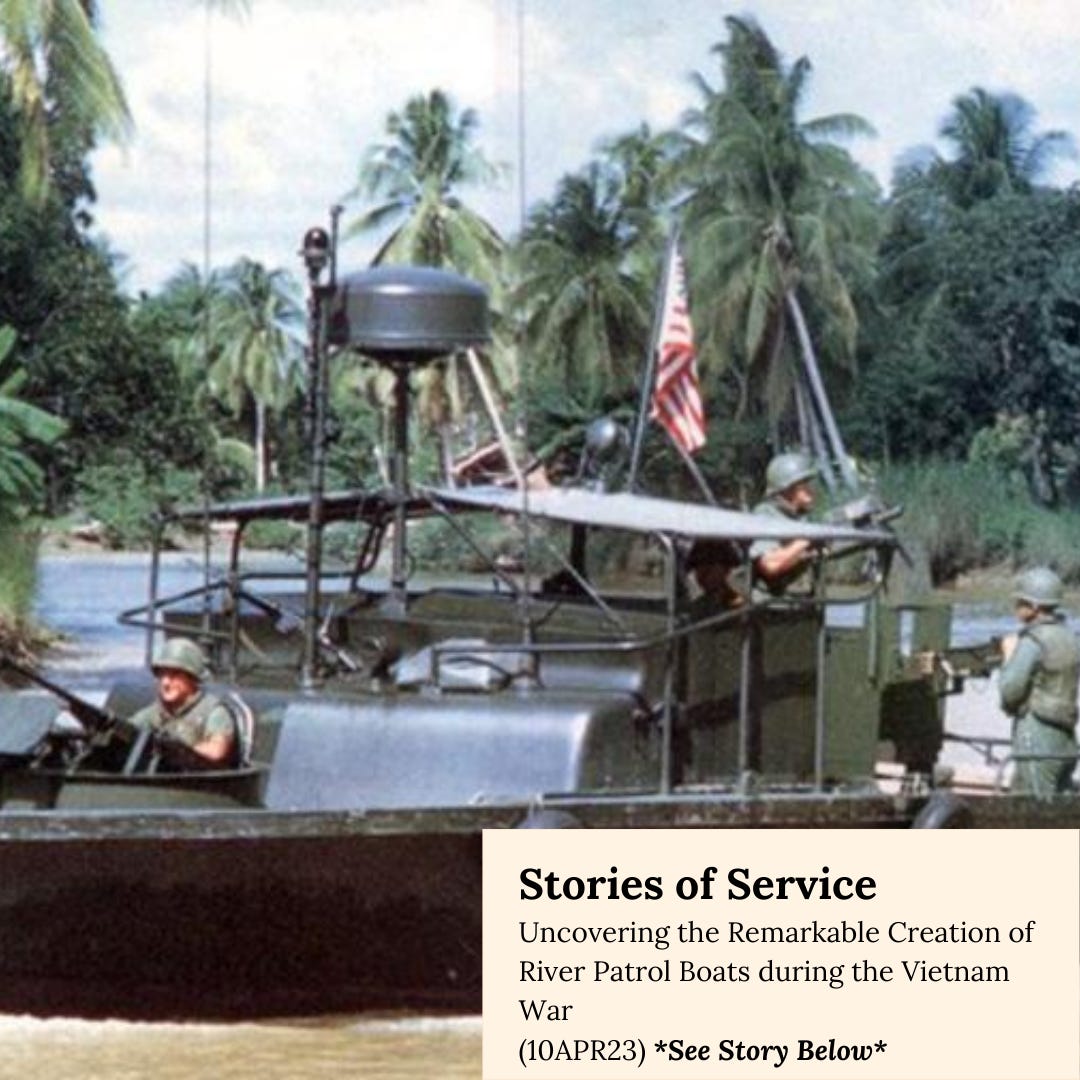
The RPBs were designed to navigate the narrow waterways and shallow rivers of Vietnam with ease. They were made of lightweight materials, which made them faster and more agile than traditional boats. These boats were armed with machine guns and were crewed by specially trained sailors who could quickly react to any threat.
The development of the RPBs was an impressive feat of engineering. They were built using a fiberglass reinforced plastic hull that was both lightweight and durable. The design of the hull allowed the boats to skim across the water's surface, minimizing their profile and making them more difficult to spot.
In addition to their speed and agility, the RPBs were also equipped with the latest technology. They were outfitted with radar, sonar, and other navigation aids, which allowed them to operate effectively in low light and adverse weather conditions.
The River Patrol Force proved to be a crucial component of the United States' efforts in Vietnam. The RPBs played a critical role in patrolling the rivers, intercepting smugglers, and preventing enemy infiltration. They also provided vital support to ground troops, transporting supplies and providing cover fire.
The creation of the River Patrol Boats is a testament to the ingenuity and resourcefulness of the American military. The development of these boats allowed the River Patrol Force to operate effectively in an extremely challenging environment, contributing significantly to the overall success of the mission.