

The Birth of MACVSOG
How the Studies and Observation Group contributed to the Vietnam War and Special Operations

The Studies and Observation Group (“SOG”) creation can be traced back to the Kennedy administration's ask for a unit that could conduct a series of covert actions against North Vietnam. The plan, recommended by Robert McNamara and Dean Rusk, contained a total of 72 categories of action.
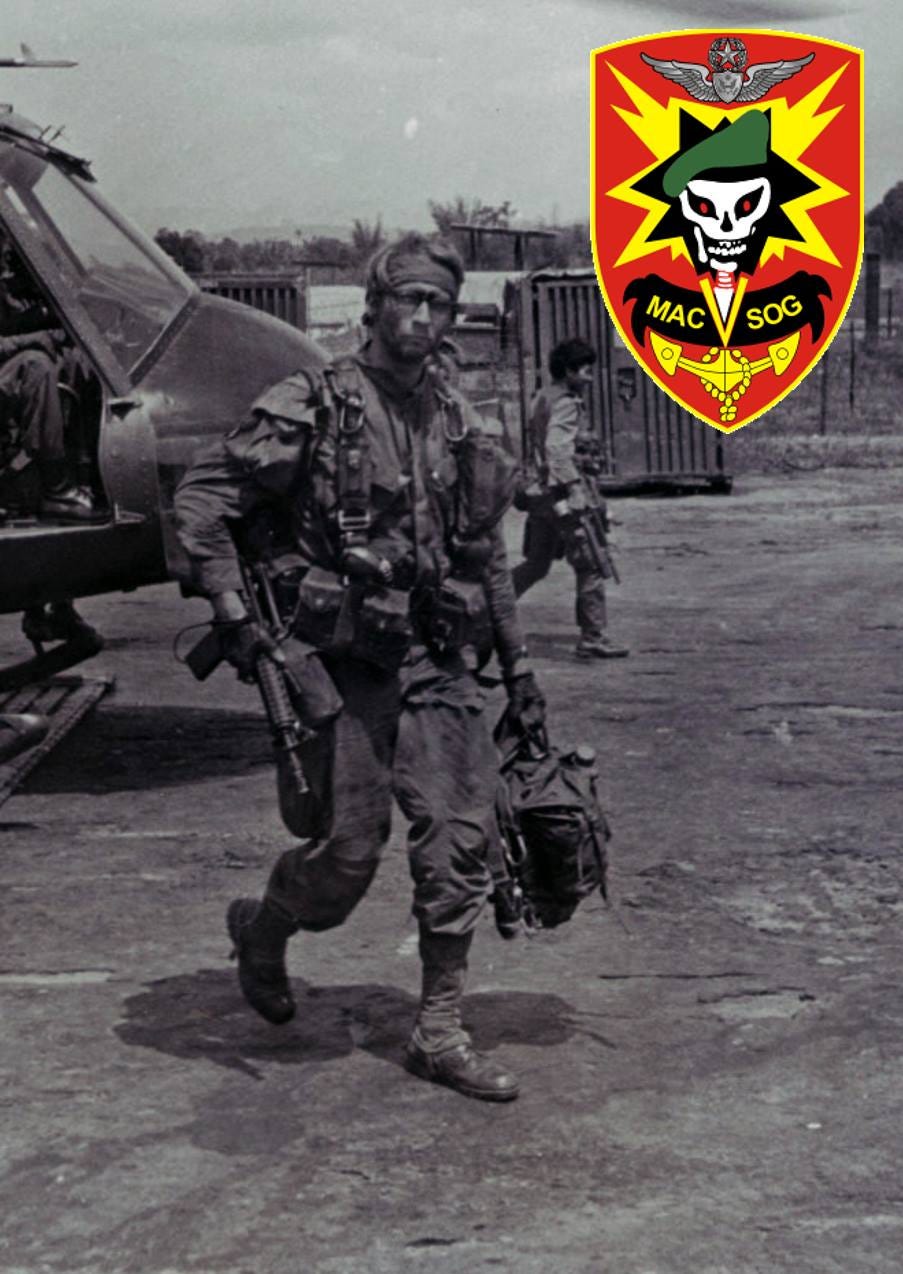
Agreeing to the need for a specialized unit, the Joint Chiefs of Staff approved the creation of SOG to conduct secret operations in Southeast Asia. The group's primary mission was to gather intelligence, conduct reconnaissance, and carry out unconventional warfare.
SOG's operations were as diverse as they were daring. The unit conducted cross-border missions into North Vietnam, Laos, and Cambodia, gathering crucial intelligence on enemy activities. One of their most notable missions was the capture of the North Vietnamese Army's (NVA) documents during Operation Tailwind in 1970. These daring forays deep into enemy territory showcased the unit's commitment to its objectives.
MACVSOG boasted an impressive roster of highly skilled and courageous individuals. Among them was Colonel John K. Singlaub, an instrumental figure in the formation of SOG. Another notable member was Major Arthur D. "Bull" Simons, renowned for his leadership in the Son Tay Raid, an attempt to rescue American prisoners of war in North Vietnam.
MACVSOG's legacy extends beyond the Vietnam War. The unit's success in unconventional warfare laid the groundwork for future special operations forces, influencing the development of units like Delta Force and Navy SEALs. The lessons learned from SOG's operations continue to shape modern military strategy and tactics.