

Ford's Contribution to WW2
Enter the B-24 Liberator

In 1942, a monumental shift occurred at Ford's Willow Run plant in Ypsilanti, Michigan, as the first production Ford bomber, the B-24 Liberator, rolled off the assembly line. Ford's prowess in mass production revolutionized the war effort. The Willow Run plant, dubbed the "Arsenal of Democracy," showcased Henry Ford's vision on an unprecedented scale. The B-24 Liberator, originally designed by Consolidated Aircraft, found a new home at Ford, where efficiency met aviation.
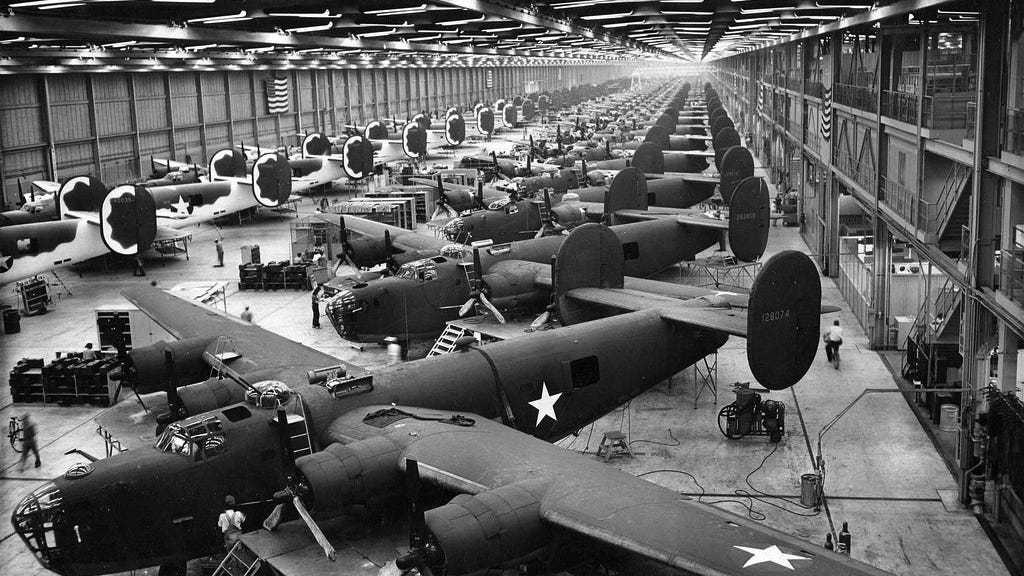
The B-24 Liberator brought a host of capabilities to the Allied forces. With a top speed of over 300 mph, a range of 3,000 miles, and a hefty bomb load, it became a game-changer. The innovative design included a sleek, high-winged structure and a spacious fuselage, making it a versatile and formidable force in the skies.
Ford's assembly line mastery extended beyond machines. The Willow Run plant became a symbol of American industrial might, employing thousands of workers, including many women, who played a pivotal role in the war effort. The plant's relentless production pace set the stage for success on the front lines.
The B-24 Liberator's impact on the Allied war effort cannot be overstated. It served in various theaters, from Europe to the Pacific, conducting strategic bombing missions and aiding in the push against Axis powers. Its long-range capabilities allowed for extended missions, turning the tide in favor of the Allies.