

D-day June 5th, 1944
The invasion that had to wait

On June 5th, 1944, the fate of the war hung in the balance as the Allied forces prepared for the most ambitious military operation ever undertaken. The masterminds behind the invasion meticulously crafted a plan that involved thousands of troops, aircraft, and ships. However, due to a combination of factors, the operation had to be postponed by 24 hours.
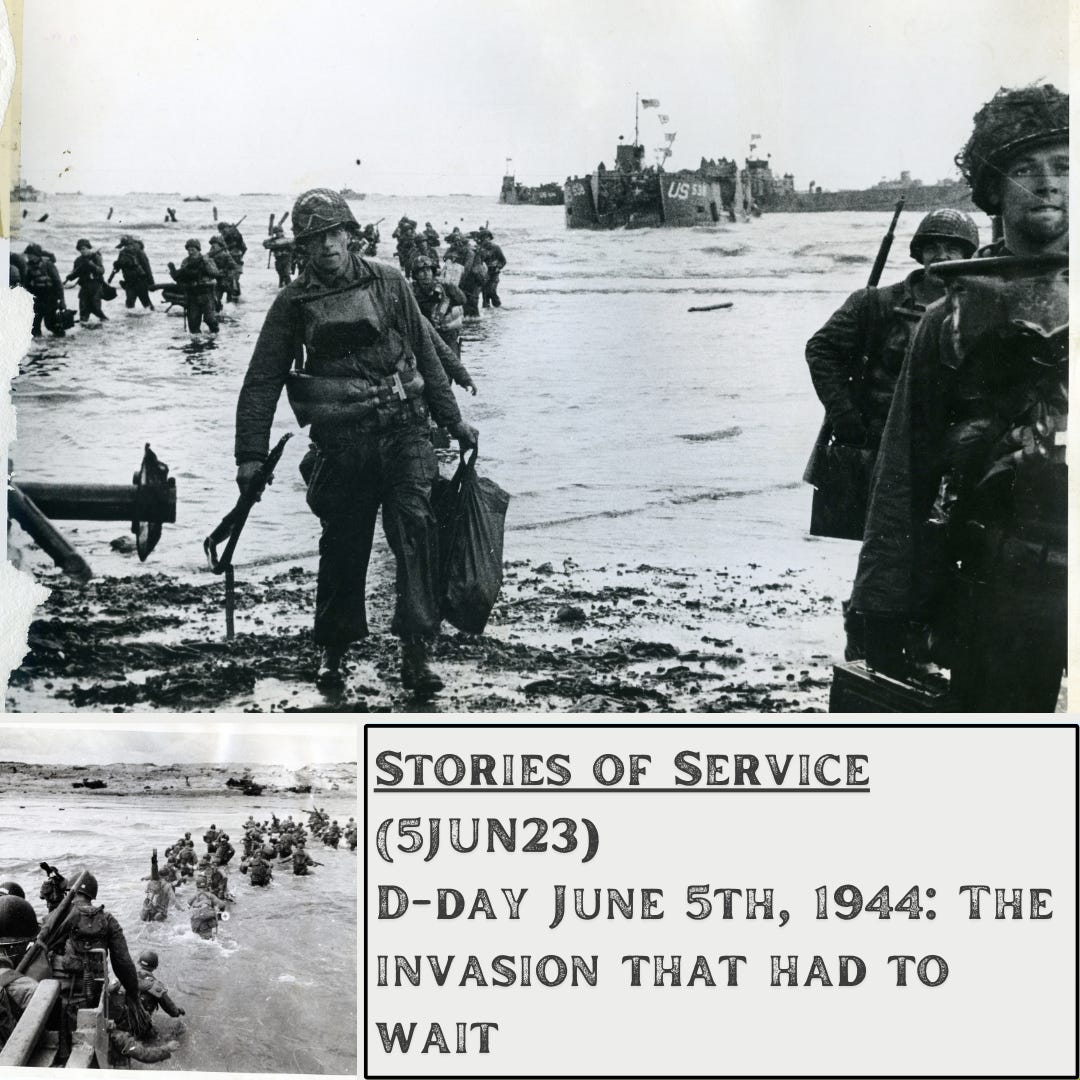
Weather Woes and Strategy Shifts One crucial factor that led to the delay of D-Day was the unpredictable weather conditions in the English Channel. General Dwight D. Eisenhower, the Supreme Allied Commander, faced a difficult decision as meteorologists predicted rough seas and poor visibility on June 5th. Recognizing the need for favorable conditions, Eisenhower made the tough call to postpone the operation to June 6th, 1944.
This decision allowed time for the weather to improve and crucially gave the Allies an advantage. The delay caught the Germans off guard, who had anticipated an invasion for months. The extra time also allowed the Allies to strengthen their strategy and make further preparations, resulting in a more successful outcome.
Overcoming Challenges Behind the scenes, meticulous planning was underway to ensure the success of D-Day. A significant challenge was coordinating the massive number of troops, ships, and supplies involved in the operation. The original plans required precise timing and synchronization among various military units, making the logistics a herculean task.
The intricate planning included the selection of landing beaches, codenamed Utah, Omaha, Gold, Juno, and Sword, each assigned to different Allied forces. These beaches were strategically chosen to exploit weaknesses in the German defenses and maximize the element of surprise.
While the original plans for D-Day on June 5th, 1944, stand as a testament to the immense scale and complexity of the operation, the delay by 24 hours due to unfavorable weather conditions proved to be a crucial decision that ultimately played a significant role in the success of the invasion. By waiting for improved conditions and making strategic adjustments, the Allies managed to surprise the Germans and gain a crucial foothold in Normandy.